McNabb Cemetery – Marion County Tennessee

A polished metal sign marks the entrance to McNabb Cemetery in Marion County, Tennessee.
Handmade. Unassuming.
Like the place it protects.

Up this gravel drive sits McNabb Cemetery. The cemetery is older than Nickajack Dam, older than the power lines streaming down the mountain’s slopes, older than the idea that this valley would ever be engineered to harness electric power for the burgeoning population of nearby Chattanooga, Tennessee.

The earliest graves date back to a time when mines operated nearby,
when families lived close to the land,
and life followed simpler rhythms.


McNabb Cemetery follows design elements of other, nearby cemeteries like the one I have explored on Aetna Mountain, known as Aetna Mountain Cemetery.

Nestled between the Tennessee River and the TVA Raccoon Mountain Pumped Storage Facility, McNabb Cemetery quietly watches two worlds pass by;
one shaped by hand tools and hard labor, the other by turbines, storage tanks, and megawatts.

Here, time moves differently.

If you never owned a calendar, you could still tell the seasons by walking these rows.
Spring brings flowers, freshly placed.
Summer brings small flags and sun-faded ribbons.
Autumn leaves collect around stones worn smooth by weather and years.
And winter brings holiday decorations and the sound of cold rain falling onto the fallen leaves.

But time doesn’t stand still and progress moves ever forward. The burgeoning population of Chattanooga is spilling over, populating the nearby mountains and altering the natural scenery.

McNabb Cemetery lies on ground surrounded by TVA property which will act as a buffer zone to protect the encroachment seen by other cemeteries in the area.

According to TVA: “The area around Raccoon Mountain is a state-designated Wildlife Observation Area. The mountaintop is home to whitetail deer, woodchucks, gray foxes and, of course, raccoons. The most compelling wildlife attraction of the area is a large wintering population of bald eagles, which can be sighted from the overlook as they hunt in the woods and waters.”
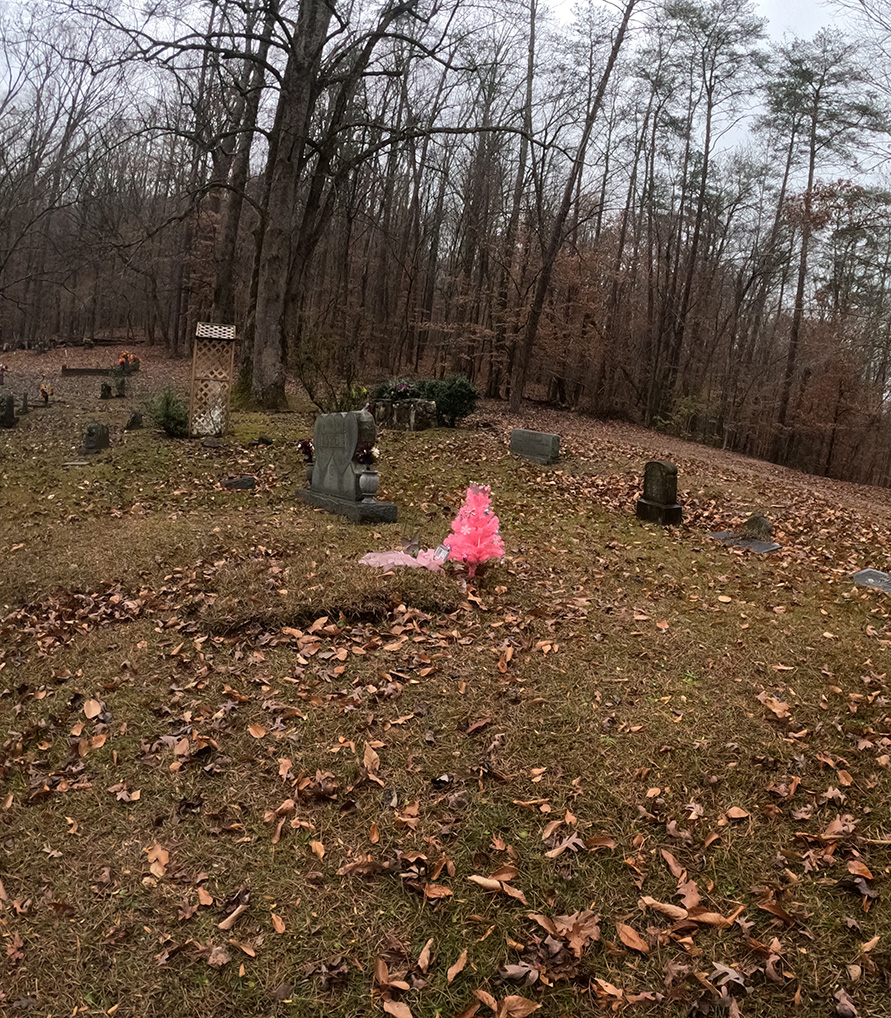
Pretty Pink Christmas Tree Grave Decoration in McNabb Cemetery

Cemeteries like this aren’t frozen in the past; they’re living records maintained not by institutions, but by families who keep showing up.

Chattanooga Memorial Park Cemetery: Red Bank/Chattanooga, Tennessee

by: Keith (The Cemetery Detective)

Introduction

Located in Red Bank, immediately adjacent to the city of Chattanooga, the Chattanooga Memorial Park Cemetery (originally known as White Oak Cemetery) sits atop rolling terrain that once served both agrarian land and Civil War strategic positioning. According to its publication, the cemetery “has been an important part of the community for more than 125 years.” Dignity Memorial+1 During my recent documentation trip I mounted a high‐resolution camera to my vehicle roof and captured a full drive‐through of the internal roadways while simultaneously logging GPS track data. This combined approach enables a temporal and geospatial documentation of the site, preserving how the landscape, stones, and pathways looked in 2025 for future researchers.


Historical Context: Community, Industry, and Landscape

In the late 19th and early 20th centuries the Red Bank and Chattanooga region grew rapidly due to railroads, wrought‐iron and steel manufacturing, coal and ore transport, and the expansion of urban Chattanooga as a regional hub. Many of the people laid to rest in this cemetery would have worked in the mills, on the railroads (including the Nashville, Chattanooga & St. Louis Railway), or in the supporting industries of the Tennessee Valley. At the same time, the location of the cemetery on higher ground above the river valley gave it both scenic appeal and symbolic permanence.

Originally designated as White Oak Cemetery, the property was described in local history thus:

“West of Hill City across Stringer’s Ridge … the Sawyer farm was acquired, and converted into a cemetery typical of those of the era.” Chattanoogan+2Dignity Memorial+2
In 1925 the name changed to Chattanooga Memorial Park after additional property was acquired. Dignity Memorial
The grounds are described as being transformed into more of a park‐like setting (particularly after landscaping efforts by long‐tenured caretakers) with features such as a duck pond and mature trees, making the site more than simply a burial ground but also a place of community memory and quiet reflection. Dignity Memorial+1


Geology, Topography and Site Layout

The topography of the cemetery reflects the region’s geological and landscape context: elevated ridges, slopes down toward the valley, and underlying limestone or sedimentary bedrock typical of east Tennessee. While specific stone‐quarry sources for monuments may vary, the choice of stone material in many of the monuments corresponds with regional availability and economic status of the families buried there.

As the site moved from farm land (the Sawyer farm and White Oak Spring area) into a landscaped burial park, the internal roadways were laid out to follow natural contours rather than rigid grids. This “park cemetery” style meant that drives are winding, uphill and downhill, allowing views over the surrounding landscape and placing monuments on terraces or gentle slopes. This design approach enhances both aesthetics and circulation.

The inclusion of the duck pond and landscaping was an early 20th‐century enhancement. The water feature further demonstrates the blending of utility and beauty: gravesites tied into a park‐like environment rather than strictly a cemetery yard. ‎Chattanoogan+1


My Temporal + Geospatial Documentation Effort

In line with the mission of The Cemetery Detective, my work at Chattanooga Memorial Park Cemetery followed a structured methodology:

  • Video Capture: Using a roof‐mounted high-resolution camera on my vehicle, I recorded a full drive‐through of all accessible internal roadways. This footage provides a continuous visual record of monuments, road surfaces, vegetation, signage, and overall condition of the cemetery at the date of recording (October 2025).
  • GPS Logging: Simultaneously I ran a dedicated GPS datalogger, logging positional data at high frequency (1-5 second interval). This produces a GPX track representing the exact route taken around the cemetery.
  • GIS Integration: After fieldwork, I imported the GPX track into QGIS (or ArcGIS) and with the future availability to overlay it with additional layers, such as:
    • Roadway polylines derived from the GPX track
    • Monument point layers (with attributes: material type, erection date, condition, inscriptions)
    • Special feature layers (duck pond, elevated ridges, park landscaping zones)
    • Temporal metadata linking frames of the video (via start time) to GPS coordinates.
      This allows for queries like “show all granite monuments erected before 1950,” or “highlight sections of the cemetery where road surface appears recently repaved or vegetation encroaching.”
  • Shareability & Future Use: By making these layers (GPX track, CSV/GeoPackage of monuments, and the video) available for download and archival, future preservationists, genealogists, and local historians can reference exactly how the cemetery looked in 2025, even as time (and weather, vegetation, development) inevitably changes the site.

Preserving Memory, Managing Change

Cemeteries like Chattanooga Memorial Park serve dual roles: resting places for individuals and collective memory landscapes for the community. The Red Bank/Chattanooga region continues to evolve with residential growth, infrastructure changes, and shifting maintenance regimes all affecting the condition and appearance of the cemetery. By providing a base-year documentation (2025) that is both visual and spatially precise, we create a benchmark against which future change can be measured.

For example: if in five years a major tree falls and damages monuments in a section; or if resurfacing alters the alignment of a road; or a cluster of older marble headstones begin to tilt, having a linked video + GPS + GIS dataset allows one to show exactly where and when change occurred.


Conclusion

My work at Chattanooga Memorial Park Cemetery in Red Bank/Chattanooga, Tennessee, is grounded in the belief that historic cemeteries merit the same precision of documentation as any heritage site. Through mounted video, synchronized GPS logging, and GIS layering, I am capturing a snapshot of this landscape as it stands in 2025. By doing so, we are able to honor not only the individuals interred here but the communities, industrial heritage, and topographic character that shaped the burial ground. Through these efforts conducted by myself and other cemetery enthusiasts, we equip future generations with a tool to monitor, research, and preserve this important piece of Chattanooga’s past.

Crisis in the Early Days of Greenwood Cemetery – Petoskey, Michigan

00:00 Introduction to Greenwood Cemetery
00:30 Introduction to Petoskey, Michigan
01:00 Mission Statement
01:30 Birth of Petoskey, Michigan
01:45 Size and Scope of Greenwood Cemetery
05:00 History of Petoskey, Michigan
06:00 The Need for a City Cemetery in Petoskey
08:00 Pandemic and World War I
14:00 Community Identity through its Cemetery

This video provides an overview of both the Greenwood Cemetery in Petoskey, Michigan, and the early history of Petoskey City itself.

The documents related to Greenwood Cemetery, a perpetual care municipal cemetery, detail its history, arboretum status, staff, and essential information like burial options and contact details, while the visitor guide outlines rules for guests concerning hours, respecting the peace, and pet guidelines.

Separately, an article from 1921 recounts the founding and growth of Petoskey beginning in 1873, focusing on its initial development around the railroad, including the first structures, settlers, and the influence of the local Ottawa tribe.

Collectively, this video looks at both a significant contemporary landmark and the historical origins of the surrounding area.

References:
https://www.TheCemeteryDetective
https://www.gwood.us/
https://www.gwood.us/visitor-guide
https://gwoodazure.blob.core.windows…. https://gwoodazure.blob.core.windows….

Cementerio General in San José, Costa Rica: A Journey through History, Art, and Culture

On my recent journey to Costa Rica, I was privileged to explore Cementerio General. Cementerio General is a renowned cemetery in San José with over a century of history, architectural beauty, and cultural significance.

Known as the “City of the Dead,” Cementerio General offers visitors an insightful glimpse into Costa Rican society. The artistic expressions of its people and the profound stories of individuals who shaped the nation’s history are on display.

A Brief History of Cementerio General

Cementerio General was established in 1845. This cemetery remains the largest and most historically significant cemetery in Costa Rica. Created at a time when Costa Rica was shaping its national identity, the cemetery is tuned to the influences of Europe. The cemetery has become the final resting place for many notable figures, from politicians and artists to everyday citizens. Each person buried here left their mark on Costa Rican history. Today, this sprawling site serves as a testament to the diverse cultural and historical layers that have shaped San José and the nation as a whole.

Architectural Highlights

One of the most remarkable aspects of Cementerio General is its eclectic architectural style. The cemetery draws inspiration from European neoclassicism, art nouveau, and art deco movements. As I walked through the cemetery, I observed impressive mausoleums and tombstones. Monuments are adorned with intricate carvings, marble statues, and ornate ironwork. Some of the statues, particularly of angels and saints, reflect the Catholic influence that permeates Costa Rican culture. These monuments convey a deep sense of reverence by offering a striking contrast against the natural landscape that surrounds the cemetery.

One standout structure is the Mausoleo del General Tomás Guardia. This ornate mausoleum is dedicated to Costa Rica’s former president. Built with classical columns and crowned with angelic sculptures, the tomb speaks to the influence of European art. It represents the respect Costa Ricans have for historical figures who influenced the nation’s development.

Stories Beneath the Surface

No matter how small or how grandiose, every grave and mausoleum in Cementerio General tells a story. The diversity of tombs reflects Costa Rica’s social history. Burial sites range from simple headstones to grandiose family mausoleums. Some graves bear photographs, personal artifacts, and inscriptions. These artifacts add layers of intimacy. I came across the graves of prominent poets, politicians, and musicians, each accompanied by small tributes speaking to their lives and legacies.

One of the most touching parts of my visit was seeing the children’s section, where vibrant toys and decorations bring color to the space. This area serves as a reminder of the lives cut short and reflects the local tradition of honoring loved ones, no matter how brief their time on earth.

Cultural Significance

Cementerio General also serves as a place for reflection. Families visit regularly to honor their loved ones, particularly on special occasions such as Día de los Muertos. Costa Rican families hold deep-rooted traditions around honoring the deceased. While this cemetery becomes a cultural gathering site during such events, the solemness and respect is maintained.

Additionally, as Costa Rica has a strong artistic community, Cementerio General has attracted the attention of photographers, artists, and historians alike. The cemetery’s rich iconography and the stories of those buried here make it an essential stop for anyone interested in understanding Costa Rica’s cultural fabric.

Reflections on My Visit

Visiting Cementerio General left me with a profound appreciation for the ways in which cemeteries can serve as cultural and historical touchstones. Beyond simply being a burial ground, this cemetery stands as a museum of life stories. It is a testament to Costa Rica’s complex identity. This experience was both humbling and inspiring. My visit reminded me of the universal nature of remembrance and the unique ways every culture memorializes those who have passed.

If you ever find yourself in San José, I highly recommend a visit to Cementerio General. It’s an experience that speaks to the heart, and one that bridges past and present, showing how cemeteries can truly serve as “cities of the dead” that reflect the living history of a place.

“The Cemetery Detective” is dedicated to preserving the cultural significance of our cemeteries. Please check back often and subscribe to our YouTube Channel for frequent updates.

– Keith

Exploring the Unique Geology of Utah’s Cemeteries: Grave Yard Hollow & Fremont Cemetery

On my recent journey through Utah, I visited many fascinating cemeteries and geologic sites. On one gorgeous October afternoon, I strolled through Grave Yard Hollow and Fremont Cemetery. Both offered not only a glimpse into the past but also a unique integration with the region’s stunning geology. As “The Cemetery Detective,” it’s always intriguing to see how the land shapes the legacy of those laid to rest.

The Geology Behind the Stones

With formal education in geology and my lifelong research of cemeteries, my interest primarily focuses on how local geology influences the gravestones. Utah’s varied geological formations—ranging from sedimentary, metamorphic, and volcanic rocks, (limestone, and sandstone to volcanic tuff)—create a diverse array of natural materials for headstones. Many of the stones I encountered were either made from or inspired by local rock formations, giving the graves an organic connection to the surrounding landscape.

Fremont_Gravestone

Grave Yard Hollow is a ravine. Erosional activity cuts deep into the landscape exposing layer after layer after layer of past geologic cycles. The variation of the material is not only striking due to its rich, earthy colors, but it also tells the story of the region’s ancient past. Sedimentary layers offer a glimpse into the geological history, much like the lives of those buried beneath in nearby Fremont Cemetery. Weathering has added texture and character as natural current weathering is working in tandem with the past.

Graveyard_Hollow

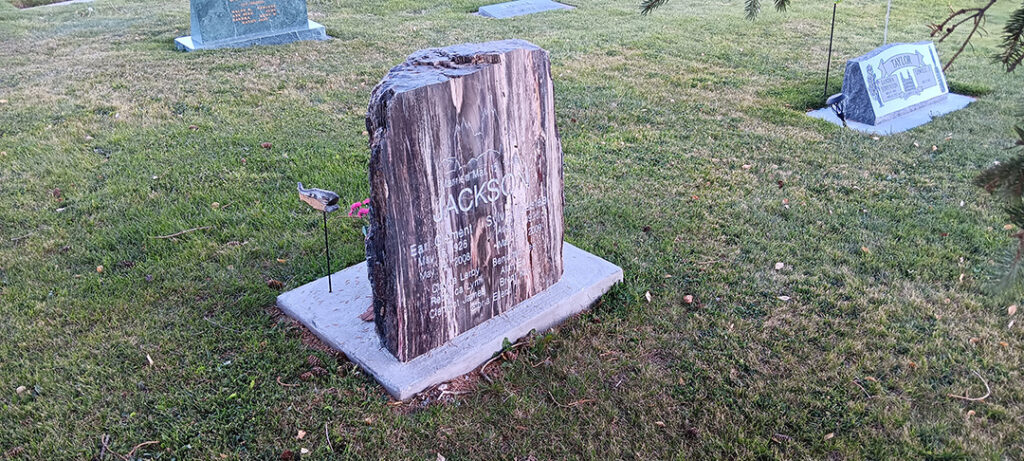
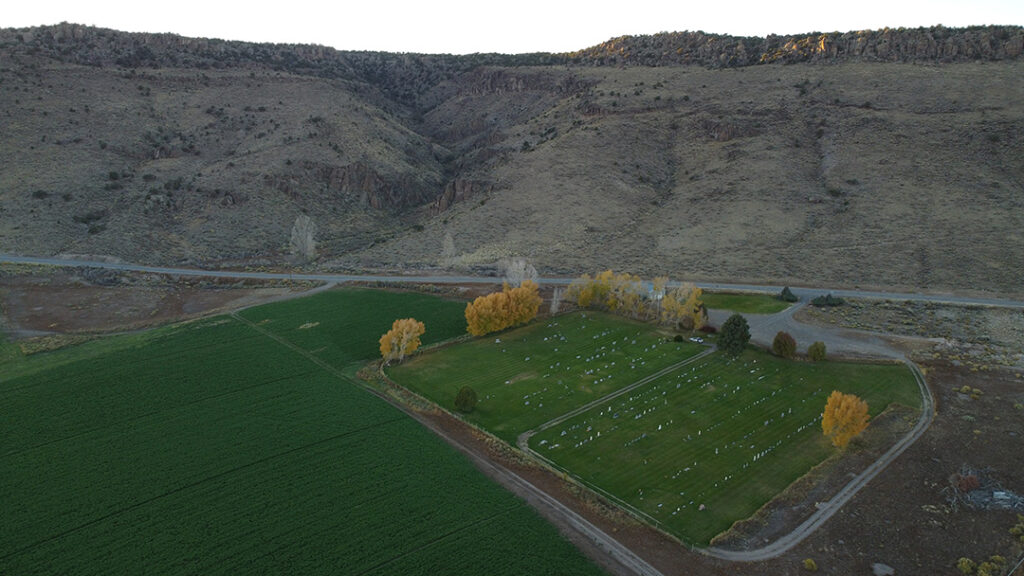
Fremont Cemetery, nestled between the mountains and lush farmland, presentes gravestones with specific and unique geological signatures. Here, many stones are composed of polished granite, limestone, and marble. Other stones reflect Utah’s geologic history, offering a stronger and more resistant material that contrasts with the softer, weathered sandstone. The granite gravestones, with their polished surfaces, stand as enduring monuments, almost impervious to the elements. The geology not only shapes the aesthetics but also impacts how these headstones endure over time.

Historical Significance and Preservation

The stones serve as historical markers, not only of individuals but of the local culture. As settlers made their homes in the rugged Utah terrain, they used the resources available to them—including local rock—to honor their dead. This practice continues a long tradition of using the earth as a connection between the living and the deceased.

Gravestone_Fremont_Cemetery

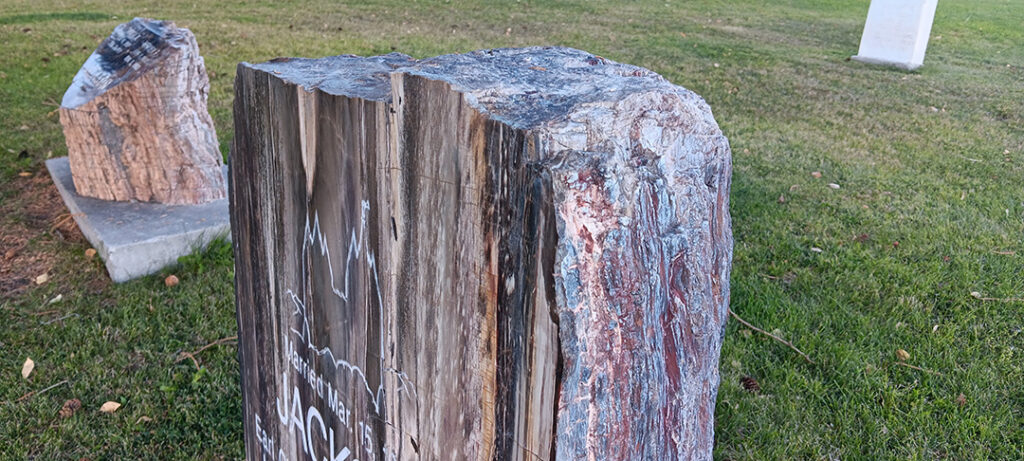
However, the local geology can also present challenges. Sandstone, though beautiful, is particularly susceptible to erosion but harder stones and fossilized stones consisting of quartz presents beauty and durability but come with additional challenges and difficulties in carving and inscription. Simple care techniques, such as gently cleaning with a soft brush and avoiding harsh chemicals, can help protect these stones from further degradation.

My Take as “The Cemetery Detective”

As I wandered through Utah’s cemeteries, I was reminded once again of how closely intertwined geology and history are in these resting places. The stones we see are not only markers of lives but are also records of the land itself. In Utah, a region known for its dramatic landscapes, it’s no surprise that the gravestones reflect that grandeur.

For anyone interested in cemetery research or simply appreciating the beauty of gravestones, I highly recommend visiting these sites. Grave Yard Hollow and Fremont Cemetery provide a peaceful yet awe-inspiring look at how nature and human memory are forever linked.

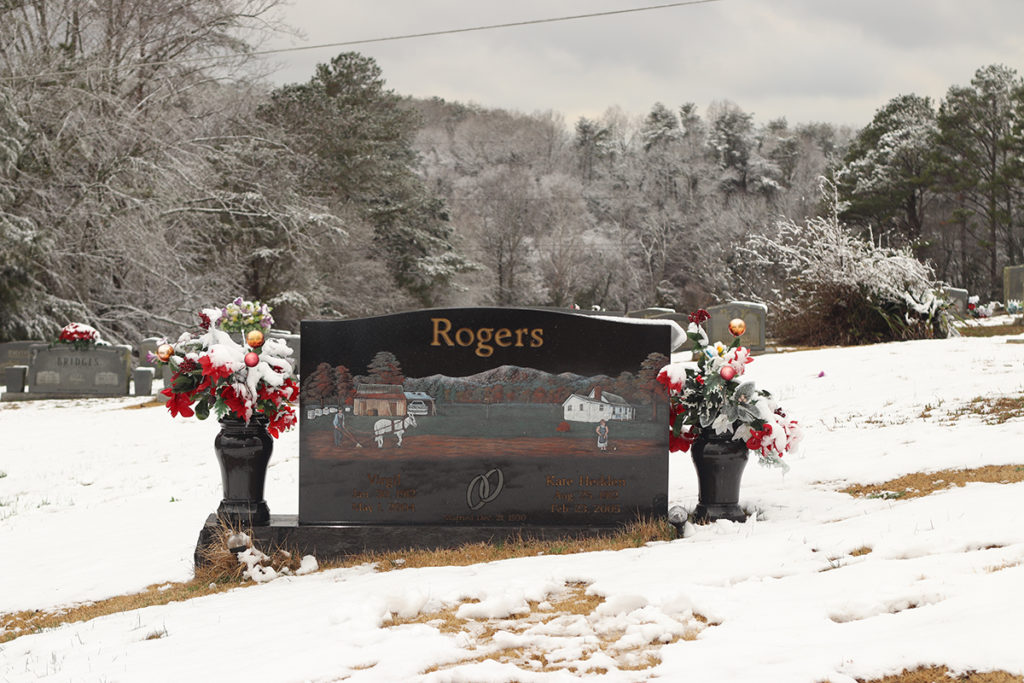
Gravestone Depicts Snowy Cemetery Scene

Grave Marker depicting a snowy scene.

Gravestones Tell a Story

Gravestones signify a person’s passing, a life lived.
Gravestones present opportunities for loved-ones to reminisce.
Gravestones allow those who never knew the deceased to imagine what their lives were like in the time they lived.
Gravestones can be as simple as uninscripted fieldstones; without names or dates, they simply mark places of burial.
Or, gravestones can give detailed information about the people’s lives, causes of death, and family connections.

I found a gravestone recently during my study of cemeteries in Polk County, Tennessee. With a laser-etched image and a few simple words, this gravestone might very well do the best job explaining a couple’s life and lifestyle of any gravestone I have ever seen.

The context of the gravestone lies in the surroundings of the cemetery. As I view the stone, behind me the hills of Chilhowie Mountain are ablaze in autumn’s colors. In front of me, the valley stretches into fertile flatlands. And all around me, Polk County slowly trudges through time as it has for two centuries.

The gravestone perfectly captures this couple’s life and the time in which they lived. He, in his overalls, is strapped behind a plow horse. She, in her apron, expertly wields a hoe. Together, they tend their garden. Beside the garden patch is a row of bee hives. Obviously, the couple made their own honey.

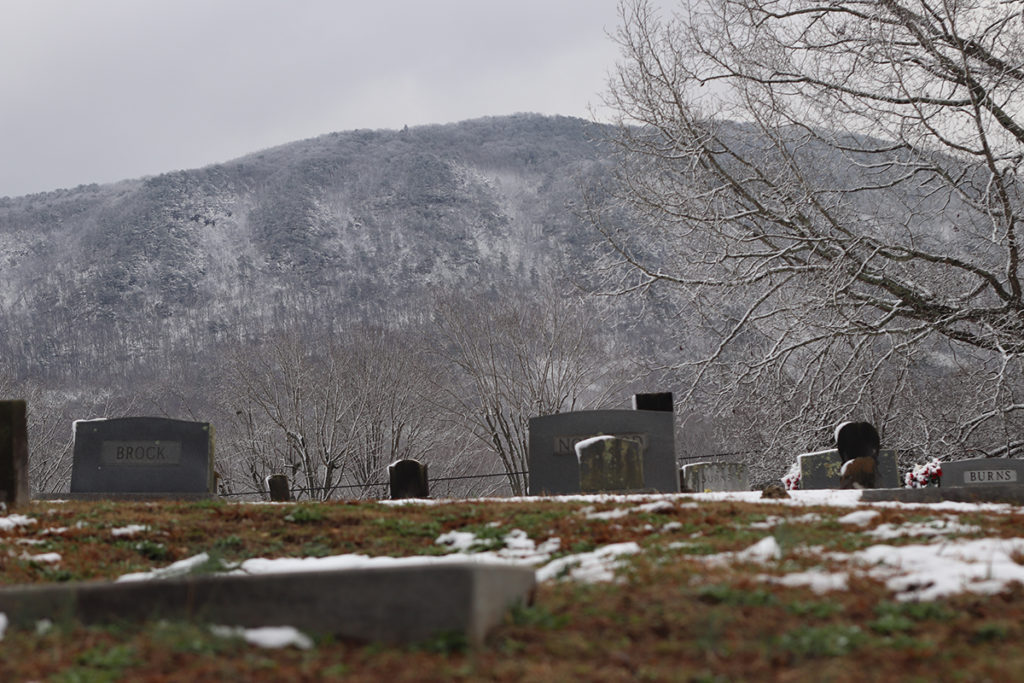
A small farmhouse sits just beyond a clothesline where the couple’s laundry was dried on warm summer days. I imagine the image is captured during a season change because the hilltops are lightly dusted with white frost. I’ve seen this frost many times but most recently when I began an early morning March paddle of the Hiwassee River not far from here.

This Gravestone Reflects an Image

The smoothness of the gravestone perfectly reflects Chilhowie Mountain behind me. I want to visit this cemetery one winter morning when there is frost atop the hills so I can see them reflected just as they are depicted on the gravestone. The crux of the scene is captured in words written on the tailgate of an old pickup truck parked in a wooden barn where the plow horse spends its nights.

The words allude to the changes that Polk County is experiencing and not only of the death of the couple buried here but the passing of a lifestyle and the fading of their home. The words are small. I have to get close to see what they actually say but when I read them, I almost tear up. “About all that’s left of the old homeplace is a lot of memories.”

The Importance of Maintaining Cemeteries

Whether a grave marker is a simple field stone or a detailed description of a person’s life, gravestones help us hold onto the memories, and that is important.

Snowy Hilltops
Snowy Hills Polk County Cemetery

All Gravestones Matter

All gravestones are important.

I believe all gravestones are important.

No matter how small. How old. In what condition they’re in.
No matter if they are in well maintained cemeteries.
Or ones that have been neglected.
No matter if the grave is of someone with whom we identify.
Or someone of a differing cultural belief.

All gravestones represent a life once lived.
And, as such, all gravestones matter.

Cemeteries and Thunderstorms

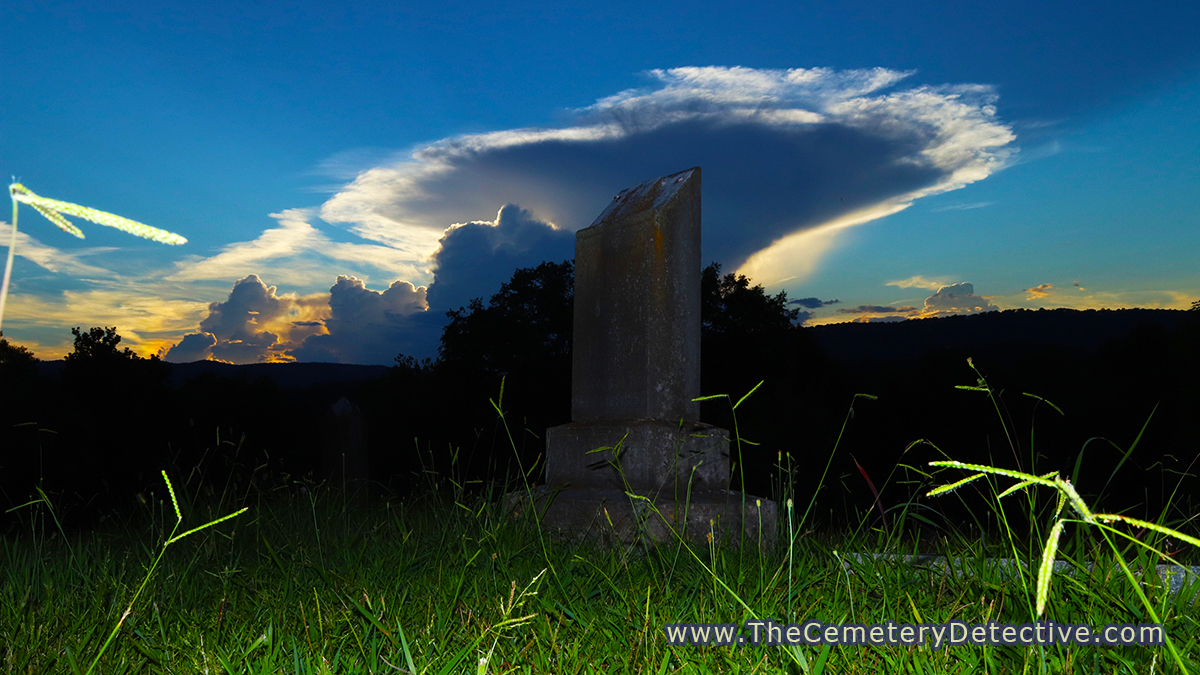
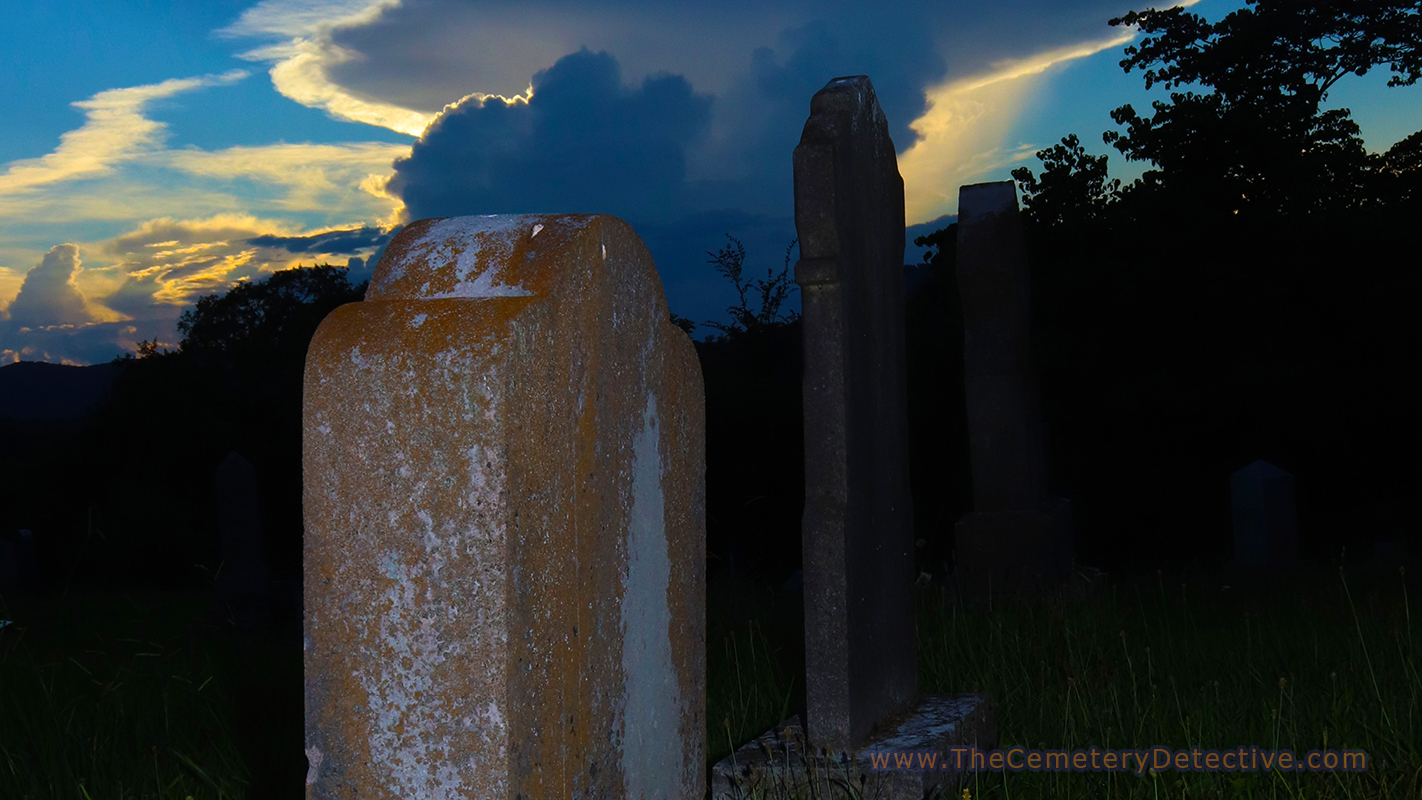
Cumulonimbus and Cemetery
Thunderstorm In A Cemetery

I Love Thunderstorms

As we roll into August, the afternoon thunderstorm cycle is intense.

Mid-day blazing hot sunshine warms the surface of the earth bringing moisture out of lakes and ponds and the ground itself. Since hot air is less dense than cold air, physics dictates warm moist columns of air rise high into the atmosphere. The sweltering summer’s day drags on. A bead of sweat forms on my forehead rolling down my face narrowly missing dripping into my eye. Surface air currents seem non-existent but high in the troposphere an enormous puffy white cloud billows to 40,000 feet.

There is a tremendous transfer of energy from sunshine to ground layer to the column of moisture rising above me. As I stare at the cloud, I can actually see it billowing, forging skyward. But, the energy that originally came from the sun cannot be contained within the cloud. All that moisture, eventually, condenses. Each drop condensates around a nearly-microscopic dust particle…trillions of them.

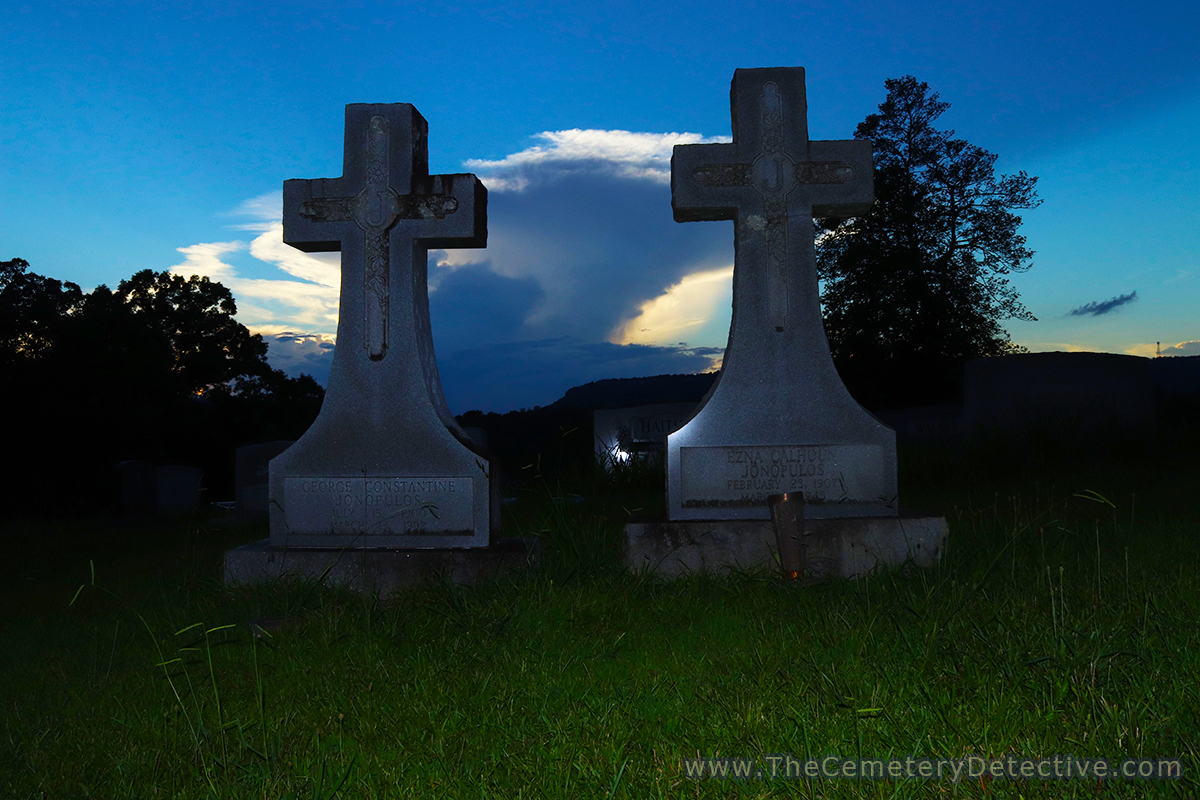
Two Crosses with Clouds
Thunderstorm In A Cemetery

The rising column of moist air causes friction as it rises through a surrounding, stable, air mass. These two air masses, rubbing against each other, affect the molecular structure of the air contained within each air mass. Molecular electrons are shed and a disparity of electrical charge presents itself within the cloud layer. When a big enough disparity of electrical charge occurs, lightning unleashes tremendous energy. Each lightning strike, 5 time hotter than the surface of the sun, regulates the electrical disparity.

And the rains begin. When enough droplets condense within the cloud, updrafts are no longer capable of keeping the larger moisture droplets aloft. Rain fall intensifies. With so much energy now released, torrential downpours bring all that moisture falling, violently, back to earth.

At the mature stage of a thunderstorm, cumulonimbus clouds present anvil formations as their tops are blown off by upper-level winds. As the storm cell moves away, the sun, which caused the formation of the storm cloud to begin with, lights the 40,000 foot tall column of dissipating cloud. The air is, once again, still.

I love watching late summer sunsets after intense thunderstorms. Yesterday was such a day. I took these photos to share with you.

Gravestones and Thunder Clouds
Thunderstorm In A Cemetery

Cemeteries and Water Towers

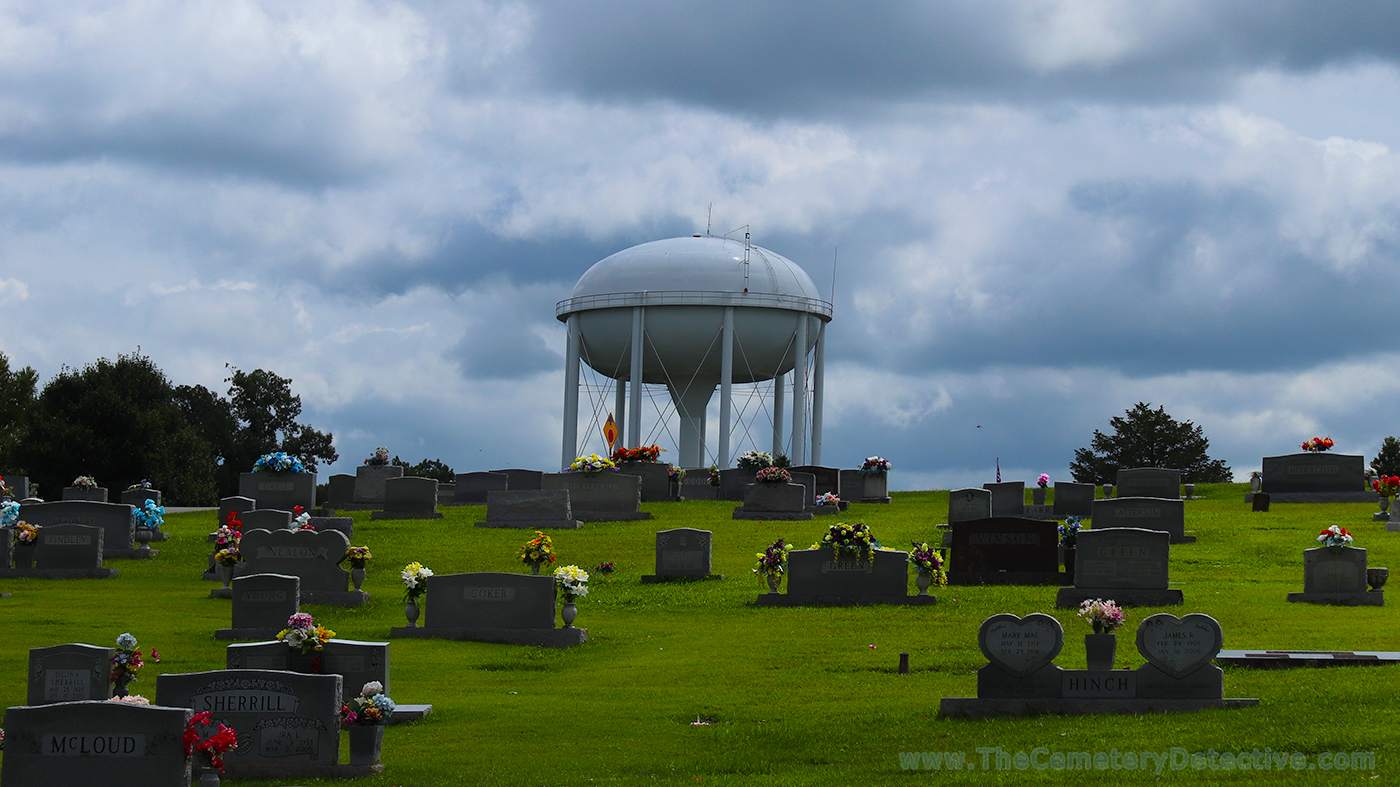
A water tower overlooking a cemetery adds a whole new dimension.

Water tower overlooking a cemetery
Cemetery and Water Tower
I’m pretty sure I have a new fascination…water towers over cemeteries. I’ve seen quite a few, recently. I found this one while researching cemeteries around the “world’s largest tree house” also known as “The Minister’s Treehouse.” (link below).

I cannot see a water tower without thinking back to a version of the War Of The Worlds movie I saw on TV when I was a kid (maybe it was a rebroadcast of the 1953 film?) where a farmer shoots a water tower mistaking it for a martian.

Now, seeing water towers over cemeteries adds a whole new dimension.

Cemeteries of Bridgeport, Alabama and Haletown, Tennessee

The Cemetery Detective explores cemeteries between Bridgeport, Alabama and Haletown, Tennessee.

I first became fond of trains while visiting Great Britain the year after I graduated college. That summer, I rode trains all the way to the northern-most reaches of mainland Scotland to a small town called John O’ Groats. Only recently have I rediscovered my love of trains with my exploration of cemeteries around the TAG (Tennessee – Alabama – Georgia) Railroad line leading from Chattanooga, Tennessee to Gadsden, Alabama.

After the TAG Cemeteries Documentary was complete, I further investigated railroads and their relation to nearby cemeteries. As such, I began investigating a railroad line which runs from Haletown, Tennessee to Bridgeport, Alabama. Though I’ve driven under the Running Water Creek Railroad Bridge hundreds of times, I had not investigated its origin. When I began researching this bridge, I found a fascinatingly long history through several iterations of railroad bridges in this area. Below is my Cemetery Documentary on this railroad bridge, U.S. Civil War actions that affected previous bridges, the land of the Cherokee before Euro-Americans moved into the area, a local cornbread festival, and, of course, the culturally significant cemeteries that dot the surrounding landscape.

If you enjoy my cemetery research, please send me a message to let me know of your favorite cemetery. Perhaps I will visit it one day soon.

Best regards:

Keith

The Cemetery Detective explores cemeteries between Haletown, Tennessee and Bridgeport, Alabama.

Join Keith as he not only explores the cemeteries of this historically significant swath of Tennessee and Alabama but also delves into the history of the local communities.

Keith begins at the current Running Water Creek Railroad Bridge. The original bridge was built not far from here prior to the War Between The States. That bridge was demolished by Confederate Soldiers in an effort to stem the advance of Union forces moving into the area to take control of Chattanooga, TN. The bridge has lived through several iterations that fell victim to flood or old age. The current bridge was built in 1968. It is in daily use.

Keith also takes us to Whiteside, Tennessee. Prior to it being called Whiteside, the community was called Running Water. Determined Cherokee Tribal Leader Dragging Canoe lived here the final 10 years of his life. Dragging Canoe staged his struggle against Euro-Americans who were streaming onto Cherokee lands via the Federal Road.

Cemeteries dot the landscape within short distance of the railroad track that cuts through the countryside.

Hale Cemetery
Hale Cemetery
Ladds Switch Cemetery
Graham Cemetery
Clouse Cemetery
Burnett Cemetery
New Hope Cemetery
Whited Family Cemetery
Harris Chapel Cemetery
South Pittsburg City Cemetery
Patton Cemetery
Patton Cemetery Annex
Gunter Cemetery
Abbot Cemetery
Mount Carmel Cemetery
Rocky Springs Cemetery
Bonaventure Cemetery

While in Bridgeport, Alabama, Keith explores the Bridgeport Railroad Museum and is fascinated with the Bridgeport Lift Bridge.

Having crossed Running Water Creek Railroad Bridge earlier in the day, the train enters Bridgeport by crossing the Tennessee River only a few feet from a 1/4 mile long walking bridge.

As a final stop, Keith visits the Virgin of the Poor Shrine in New Hope, Tennessee.